Why can the scale change before your period?
Hormonal changes across the menstrual cycle can influence fluid balance, appetite and digestion. Some people notice bloating, a heavier-feeling body or short-term shifts in scale weight before or during menstruation. These changes vary a lot from person to person.
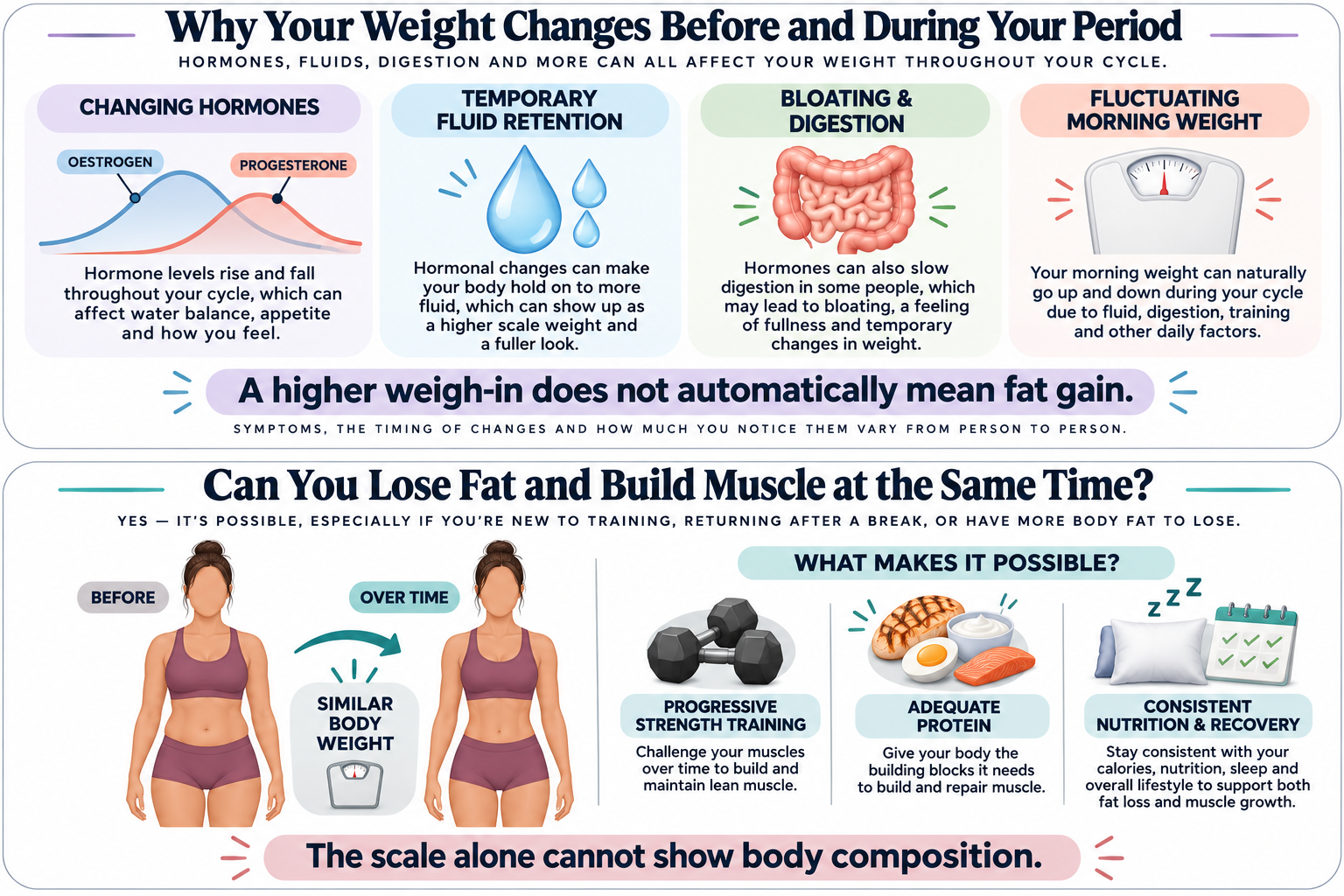
Water retention is not automatically body-fat gain
When fluid balance changes, body weight can rise without an equivalent increase in body fat. The exact amount and timing vary, and there is no universal number you should expect. A weigh-in taken at a different cycle stage may not be directly comparable to one from last week.
Digestion can also affect how you feel
Changes in bowel habits, gas and abdominal fullness may make your waist or stomach feel different. Normal digestive changes can be uncomfortable, but persistent or severe symptoms should not simply be dismissed as “just hormones”.
What about cravings and appetite?
Some people feel hungrier or notice different food preferences during parts of the cycle. Planning satisfying meals and enough food to support training may be more sustainable than forcing unnecessary restriction and then feeling out of control.
Coach’s take: compare like with like
If your weight is up during a week when your period is due, we do not automatically assume your plan has stopped working. We review how you feel, your workouts and the longer-term pattern before changing anything.
Should you change your training during your period?
There is no single rule. Some people feel fine training as normal; others benefit from reducing intensity or taking extra rest when symptoms are uncomfortable. Adjust to how you feel rather than assuming everyone needs the same routine.
How to track progress more fairly
- Note menstrual-cycle timing alongside measurements if it helps.
- Use longer-term trends instead of a single weigh-in.
- Pay attention to strength, energy and recovery.
- Consider comparing similar stages of different cycles.
- Avoid reacting to one unusual number by sharply cutting calories or adding excessive cardio.
When should you speak to a clinician?
Very painful periods, heavy bleeding, significant swelling, persistent digestive symptoms, sudden unexplained weight changes or symptoms that interrupt your life deserve medical attention.
The takeaway
Your cycle can affect the scale, but it does not invalidate your effort or progress. For related advice, read bloating versus water retention and why weight goes up after training.