Why can your weight increase after starting the gym?
A jump on the scale after beginning strength training can feel disappointing. But the number includes more than body fat, and early changes are often influenced by fluid shifts and normal recovery from exercise.
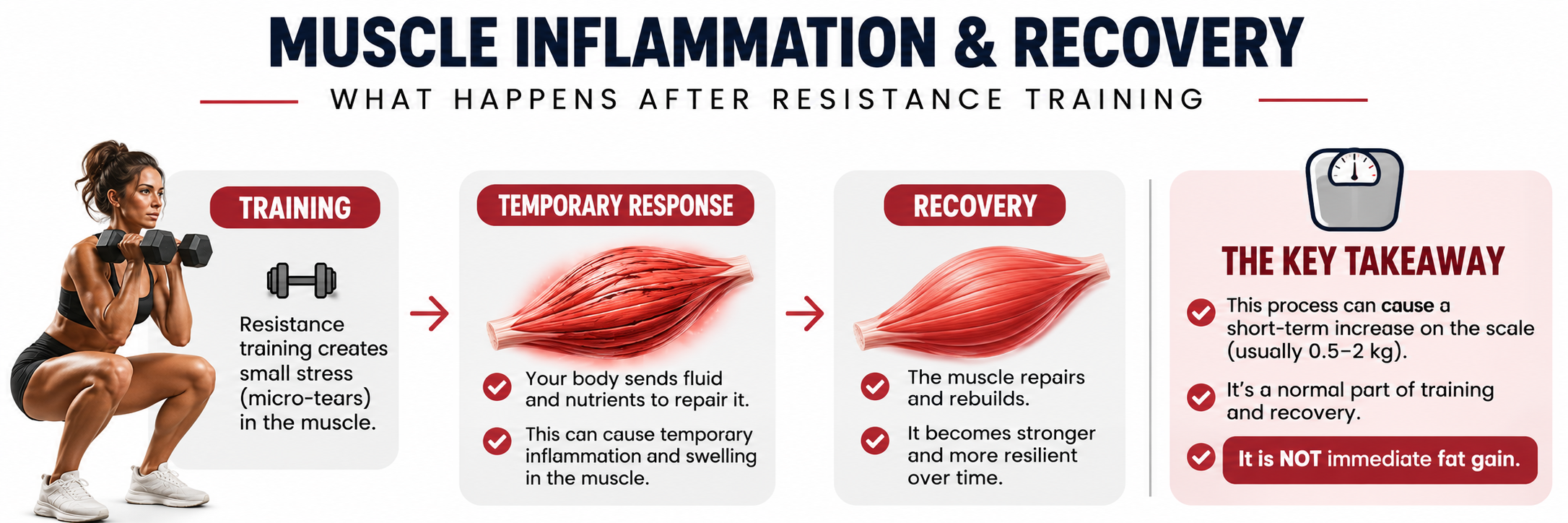
New training can affect water balance
Unfamiliar or harder sessions challenge your muscles and create a normal repair response. That process can temporarily increase water retention. Muscle soreness and a higher weigh-in after a tough leg day do not prove you have gained fat.
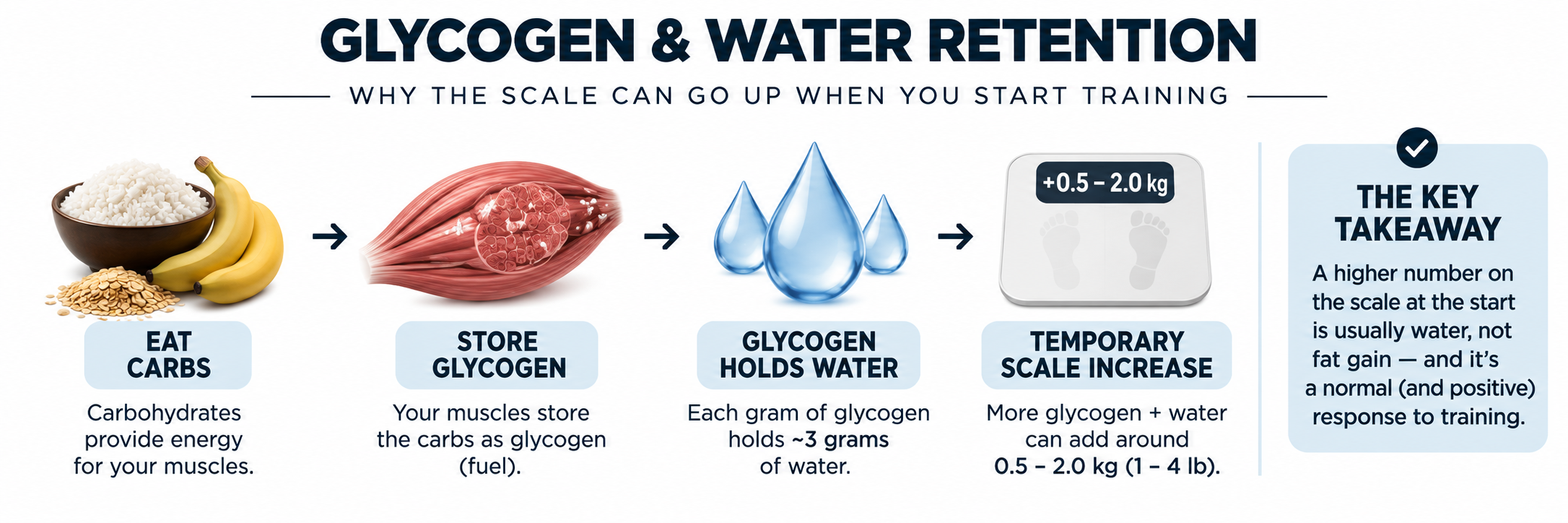
Stored carbohydrate comes with water
Your muscles store carbohydrate as glycogen to help fuel activity. When your training and food intake change, glycogen stores can change too. Glycogen is stored alongside water, so fuller stores can move your weight up without corresponding fat gain.
Imagine this
You start lifting, keep your food broadly consistent and see a small increase in weight. Meanwhile, your workouts improve and your waist stays the same. That is a reason to review the pattern, not immediately slash calories.
Can you build muscle and lose fat?
Some people, especially those newer to resistance training, may gain muscle while losing fat over time. Progress is individual, and changes in body composition are usually gradual. A single week of extra weight cannot tell you how much muscle you have built.
What should you track instead?
- Strength and repetition progress in your training log
- Consistent waist or other measurements, if helpful
- How clothes fit and how you feel during workouts
- Weight trends over time rather than isolated readings
- Energy, recovery and whether the plan is sustainable
How long does water retention last?
There is no universal timeline. It depends on how unfamiliar or demanding the exercise is, your recovery and other factors. Avoid treating a temporary weight shift as a reason for dramatic changes to training or food intake.
Should you stop strength training to lose weight?
Generally, no. Resistance training is a valuable part of a body-composition programme because it helps maintain or develop strength and muscle. Pair it with an appropriate nutrition plan and activity you can sustain.
The takeaway
When you start lifting, pay attention to progress that the scale cannot show. For practical training ideas, read how to build glutes with weights, explore client transformations or learn about our coaching approach.