Why can your body look different from one day to the next?
Your body changes throughout the day. Food and fluid move through your digestive system, hormones affect fluid balance and training can change how much water you retain. These shifts may alter how your stomach feels, how clothes fit and the number on the scale.
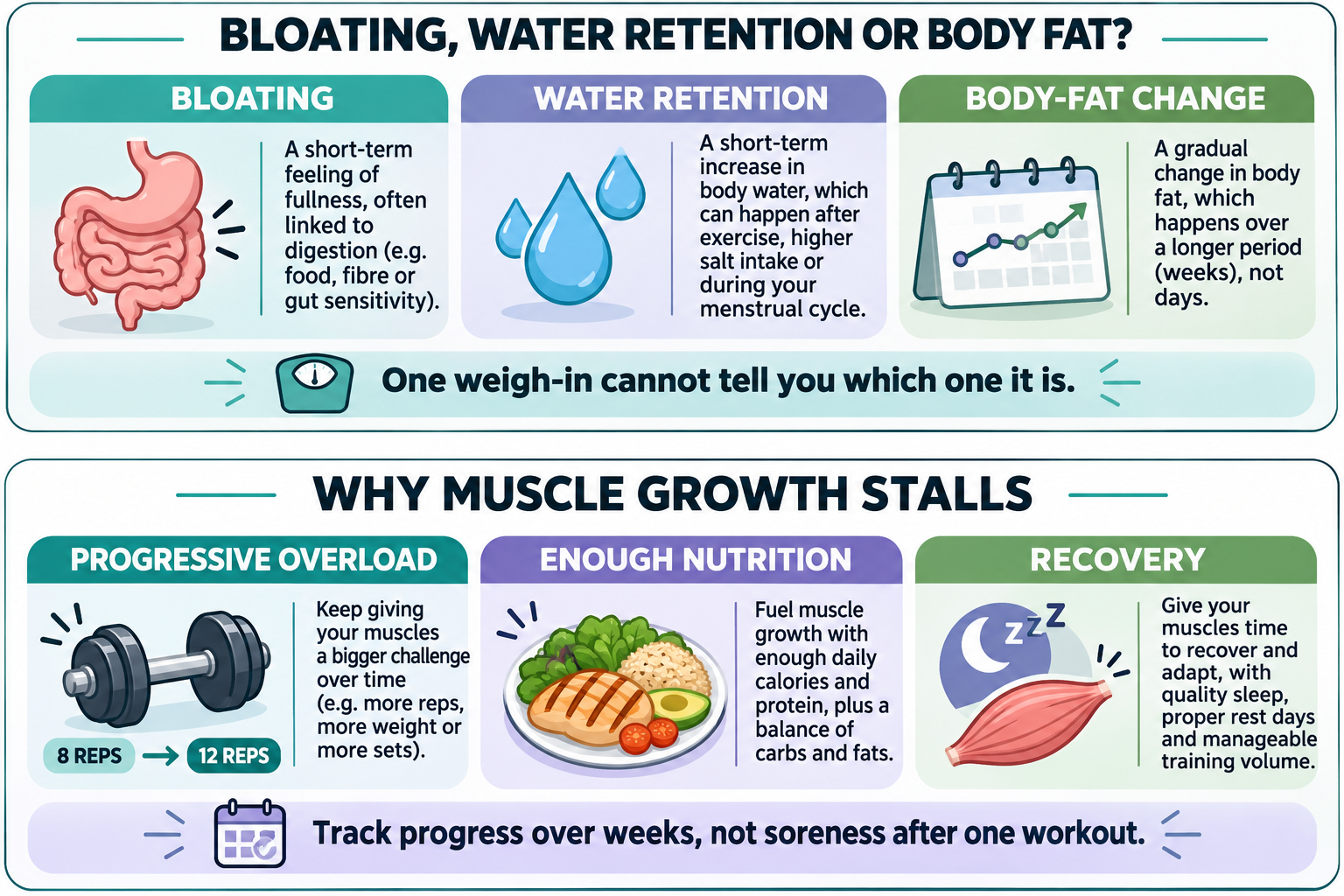
What is bloating?
Bloating often feels like pressure, tightness or fullness in the abdomen. Gas, constipation, food volume and certain digestive issues can all contribute. Some people also notice visible abdominal distension, especially later in the day. Bloating is a symptom, not a measurement of body fat.
What is water retention?
Fluid shifts can happen after salty meals, a change in carbohydrate intake, intense exercise, travel or around the menstrual cycle. Your scale weight can change relatively quickly because of water. Some people notice temporary puffiness or swollen-feeling fingers; persistent or pronounced swelling deserves medical evaluation.
What about body-fat changes?
Body fat generally changes through sustained energy balance over time. You cannot reliably identify fat gain from one meal, one day of bloating or one morning's body weight. Longer-term trends and a broader picture of progress are more useful.
Coach’s take: do not diagnose yourself from a photo
We look at patterns. If your stomach feels fuller after dinner but different again the next morning, that is not enough to conclude that you have gained fat. Look at your digestion, training, routine and longer-term measurements.
How can you tell what is happening?
- Timing: did the change develop after a meal or hard session, or across many weeks?
- Sensation: does your stomach feel tight, gassy or uncomfortable?
- Context: have sodium, carbohydrates, travel, sleep or menstrual symptoms changed?
- Trend: are measurements and weight persistently changing over time?
These clues can help you describe symptoms, but they cannot reliably diagnose the cause.
When should you seek medical advice?
Persistent, severe or unexplained bloating, ongoing abdominal pain, vomiting, blood in the stool, significant unexplained weight change or new swelling should be evaluated by a healthcare professional. Seek urgent medical help for severe symptoms.
The takeaway
Learn the difference between short-term body changes and longer-term trends before changing your diet. Read about water retention after training and period-related weight changes.