What does body recomposition mean?
Body recomposition means reducing body-fat mass while maintaining or gaining muscle over time. This is why someone can look leaner, feel stronger and notice a smaller waist even when the number on the scale changes very little. Scale weight measures everything together, not how that weight is made up.
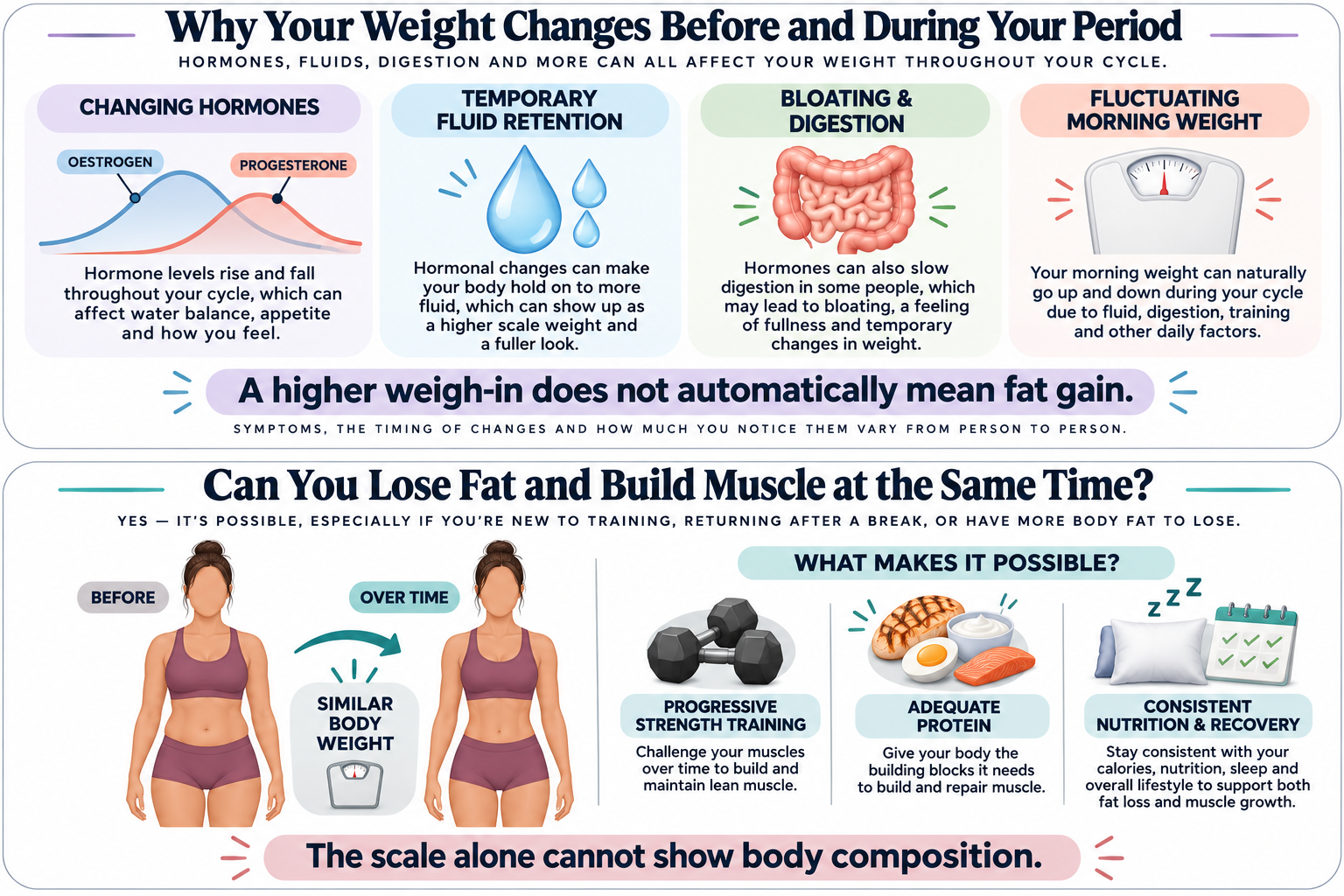
Can you really lose fat and gain muscle together?
Yes, it is possible, although how much you can achieve depends on your training history, starting body composition, nutrition and recovery. People who are new to consistent strength training or returning after time off may find it easier to make noticeable changes. Experienced lifters can still improve their body composition, but progress may be slower and harder to measure.
1. Strength training provides the stimulus
A programme with progressive resistance training gives muscles a reason to adapt. Repeat key movements, use challenging but controlled sets and track your weights and repetitions. Training hard does not mean that every workout needs to leave you exhausted.
2. Nutrition must support both goals
Fat loss generally requires a sustained energy deficit, while muscle growth and recovery require enough energy and protein. A moderate, individualised approach is usually more sustainable than extreme restriction. Not everyone needs the same calorie target, and an aggressive deficit can make muscle gains more difficult.
3. Protein and recovery matter
Eating sufficient protein, sleeping well and allowing recovery between hard sessions help support adaptation. More cardio, extra workouts and less food are not automatically the answer when progress slows.
Why might the scale stay almost the same?
Imagine losing some fat while gaining some muscle over several months: your total body weight might change less than you expect even as your shape changes. Water, glycogen, digestion and menstrual-cycle changes may also temporarily influence weigh-ins. No single measurement tells the full story.
Coach’s take: your photos and performance matter too
We want clients to notice more than the scale. Are you getting stronger? Are your measurements or how clothes fit changing? Do your check-in photos show a difference over several weeks? Those trends can help us assess progress and adjust the plan without panicking over a single weigh-in.
How to track body recomposition
- Compare progress photographs under similar lighting, poses and conditions.
- Monitor body-weight trends over time, rather than one daily number.
- Check waist or other relevant measurements consistently.
- Keep a training log to see changes in strength, repetitions and control.
- Review recovery, hunger and energy before changing calories or cardio.
How long does it take?
Visible changes in muscle and fat generally require consistent work over weeks and months. The rate varies considerably between individuals. Be cautious with promises of dramatic changes in a few days or guaranteed results at a specific body weight.
The takeaway
You can lose fat and build muscle at the same time, but the process is individual. Strength training, supportive nutrition, adequate protein and patience matter more than chasing the lowest number on the scale. Explore why muscle growth can stall, protein requirements and personalised coaching.