Why is protein so important?
Protein provides amino acids your body uses to build and repair tissues, including muscle. If you lift weights, are working on body composition or want to maintain muscle while losing fat, eating enough protein is useful. It is still only one part of a complete diet.
How much protein should you aim for?
For many healthy adults doing regular resistance training, a practical starting range is around 1.4–2.0 grams of protein per kilogram of body weight per day. Your ideal target can vary depending on training, dietary intake and personal circumstances. The upper end is not a requirement for everyone.
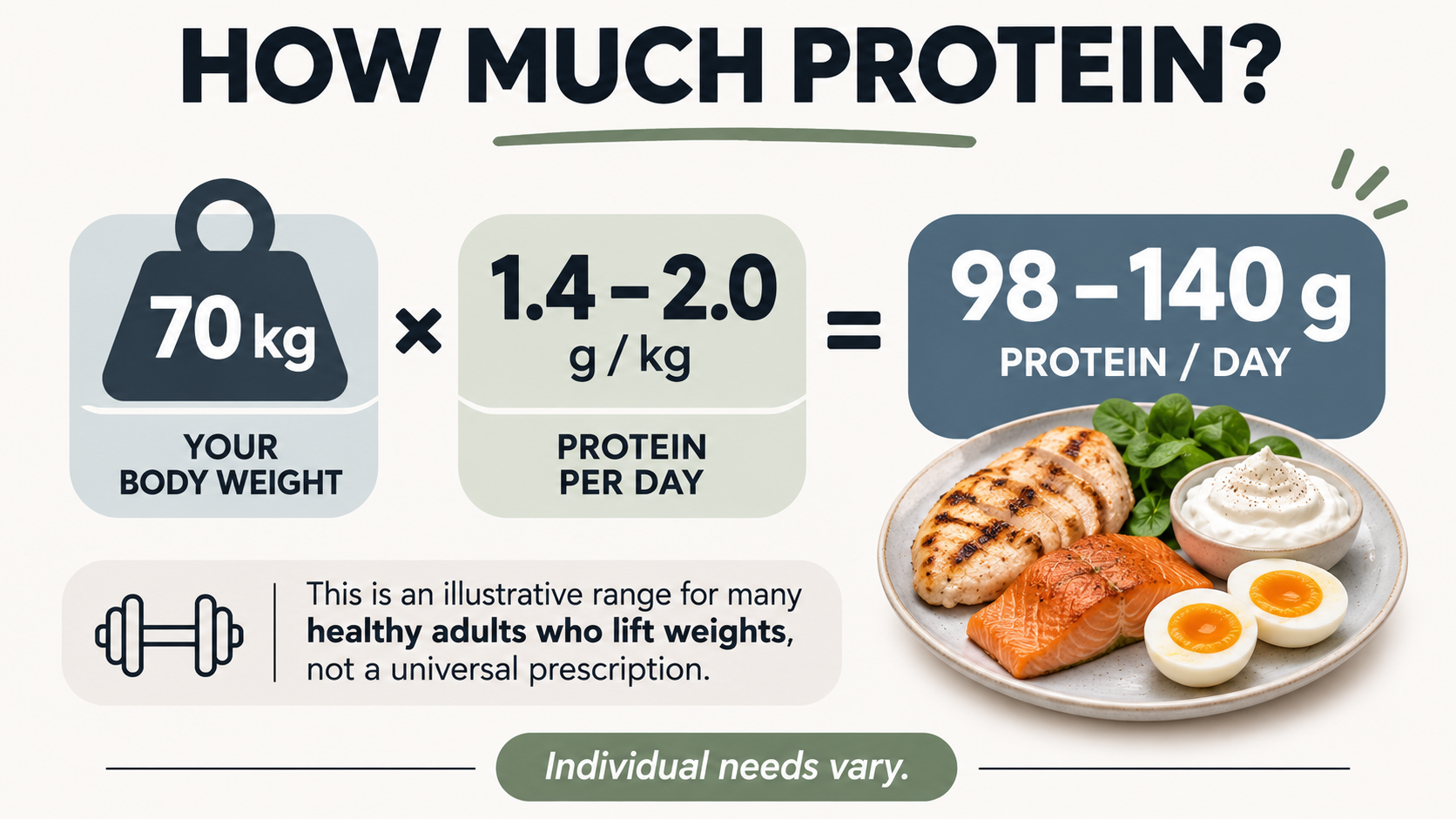
Simple example
At 70 kg, a range of 1.4–2.0 g/kg works out to roughly 98–140 g per day. This is an example, not a personal prescription.
Do you need to eat protein at every meal?
Spreading protein across meals is an easy way to reach your target and provide regular opportunities for muscle repair. You do not have to eat every two hours or panic if one meal is low in protein. Daily consistency matters more than perfect timing.
What are easy high-protein foods?
- Eggs, fish, poultry and lean meat
- Greek yogurt, cottage cheese and other dairy foods
- Tofu, tempeh, lentils and beans
- Protein-rich meals built around foods you enjoy
Plant-based diets can supply enough protein too; using a variety of sources helps. You can also use protein powder for convenience, but it is not essential if meals already meet your needs.
Does eating more protein automatically build muscle?
No. Your training must create a reason for your body to adapt. Progressive resistance training, sufficient overall energy intake and recovery are important. Protein supports that process rather than replacing it.
What if your goal is fat loss?
Adequate protein can help support muscle retention while you are in a calorie deficit. Avoid making your calorie target so restrictive that training, energy and adherence suffer. More protein cannot make an unsuitable diet sustainable.
Can everyone follow these ranges?
No. People with certain medical conditions, particularly those requiring protein restrictions, should get individual advice from their healthcare team. Teenagers, pregnant people and people with other specialised nutritional needs should not use adult gym targets as a blanket rule.
Make it practical
Instead of chasing a perfect number on day one, look at your usual meals and find small improvements you can repeat. Read our online coaching guide or download a free fitness guide for your next steps.