Why is hard training not always effective training?
Muscle growth depends on a useful training stimulus repeated over time, sufficient recovery and supportive nutrition. If you are constantly sore but not stronger, the answer is not automatically another workout or more sets.
1. You cannot see your progression
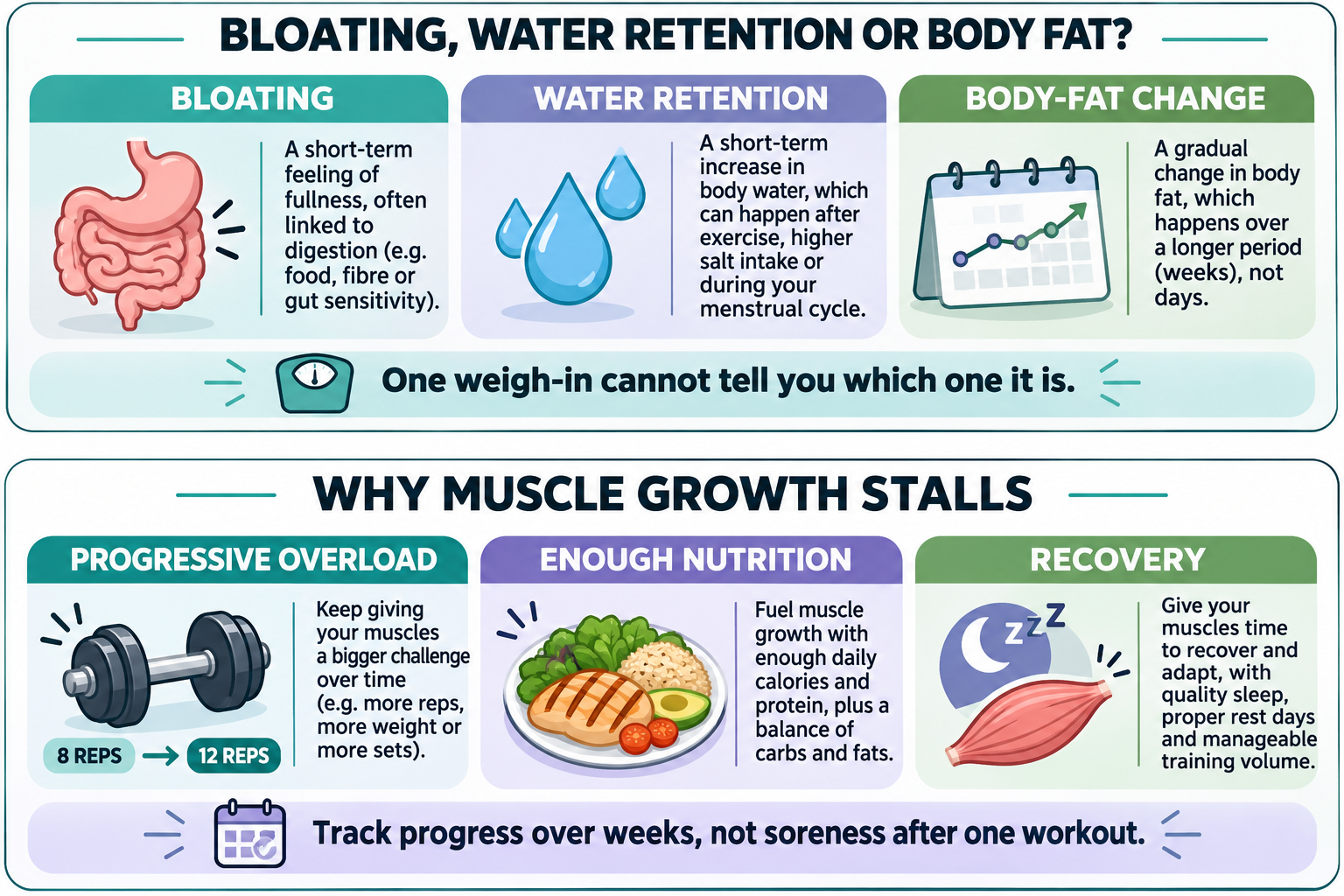
When you never record your weights, sets or repetitions, it is hard to know whether the challenge is increasing. Progressive overload might mean one more controlled repetition, slightly more load or doing the same work with better technique.
2. Your programme changes every week
Exercise variety can be useful, but changing everything constantly removes the opportunity to improve at key movements. Choose a structure that you can repeat and adjust deliberately rather than chasing whichever exercise is trending.
3. Your training volume may not suit you
Too little challenging work can limit progress. Too much, especially when recovery is poor, can reduce session quality. The right amount depends on your experience, goals, schedule and how you are responding. More training days do not automatically produce more muscle.
4. Your nutrition may not support adaptation
Muscle growth uses energy and amino acids. Adequate protein matters, and very restrictive calorie intake can make progress difficult. You do not need to overeat to build muscle, but you do need enough food to train and recover well.
5. You may be overlooking rest and sleep
Sleep, stress and rest days are part of the programme. If you keep increasing volume while getting progressively more tired, review your overall recovery before deciding that you need to train harder.
Coach’s take: focus on performance, not just soreness
A useful question is: “What can I do better this month compared with last month?” More consistent reps, improved control and steady strength progress tell us far more than whether you can barely walk after leg day.
A practical progress checklist
- Choose a few repeatable core exercises.
- Record your training with consistent technique.
- Build volume gradually and leave room to recover.
- Eat sufficient protein and maintain sensible nutrition.
- Review several weeks of progress before making major changes.
How long does muscle growth take?
Visible changes usually take time. Training experience, genetics, nutrition and consistency all matter, and progress will not look the same for everyone. Be cautious of promises of dramatic transformations in only a few workouts.
The takeaway
A structured programme beats random intensity. Explore how to build glutes, how much protein you need, and our tailored coaching.