Eating less, but the scale will not move?
It can be frustrating when you are putting effort into your diet and the number on the scale barely changes. But a stalled weigh-in does not automatically mean your body has stopped responding, and it does not mean you need to eat as little as possible.
Body weight reflects more than body fat: water, stored carbohydrate, food in your digestive system and normal day-to-day changes can all affect the number you see.
1. Look at the trend, not one weigh-in
Weight can temporarily rise after a hard workout, a salty meal, travel, poor sleep or around the menstrual cycle. Comparing a single Monday weigh-in to last Monday can hide the wider pattern. When weighing is appropriate for you, use consistent conditions and compare averages over several weeks.
What we check with coaching clients
We look at more than weight: training performance, waist measurements, adherence, energy, recovery and progress photos when suitable. Changes in these areas can help explain a scale plateau.
2. “Eating less” is not the same as a consistent calorie deficit
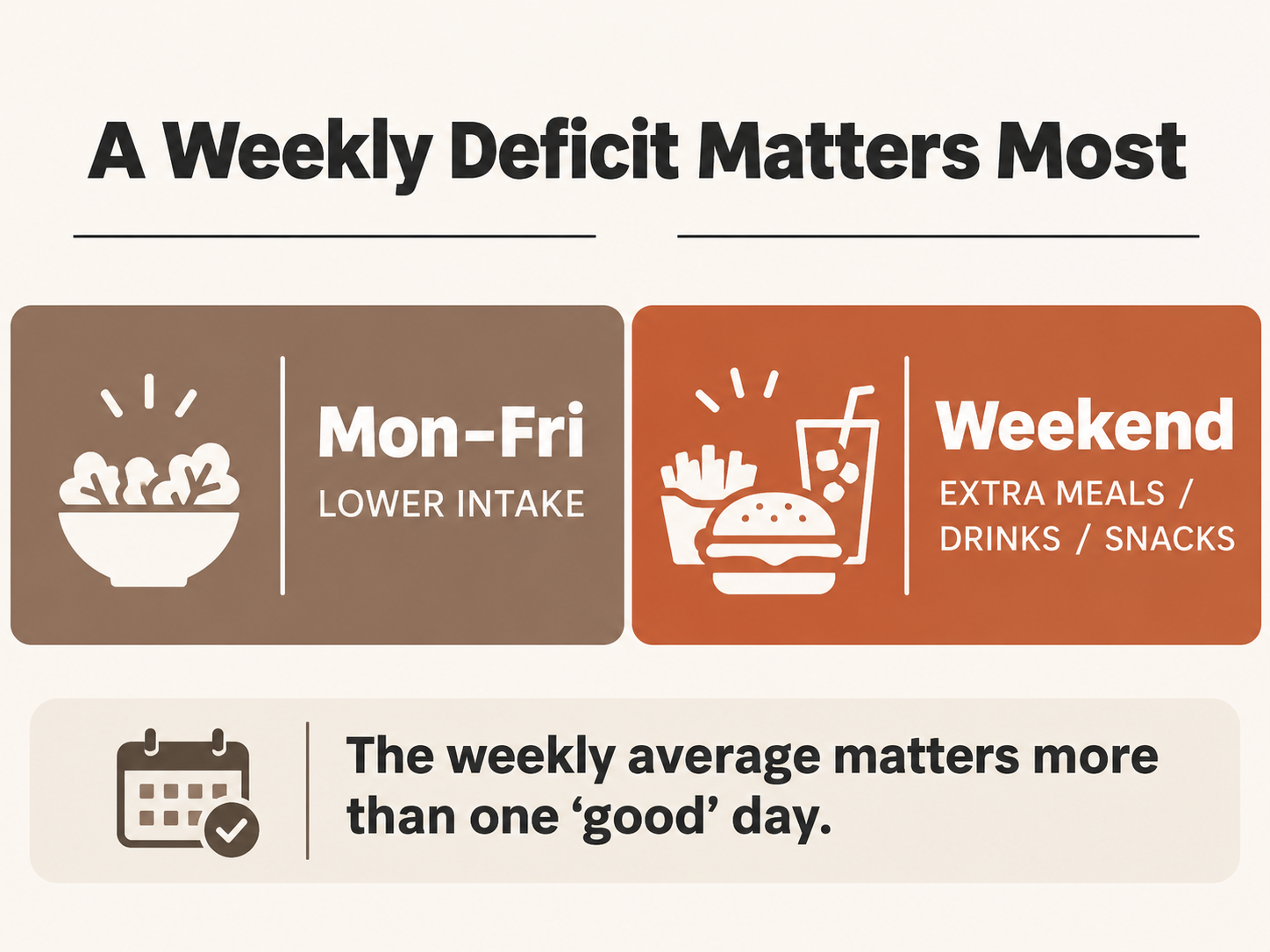
You might be eating less than you used to but still averaging close to your current energy needs. Portion sizes, oils, drinks, weekend extras and inconsistent tracking can make intake harder to estimate. That does not mean you should become obsessive with food; it means identifying a few practical habits you can measure reliably.
3. Your activity may have changed
When food intake decreases, some people naturally move less during the day. A desk-based routine, lower step count or reduced training can change total energy expenditure. Look for sustainable movement you enjoy rather than trying to compensate with endless cardio.
4. Digestion and recovery matter for interpreting weight
Constipation can temporarily affect scale weight. Hard training can also bring short-term fluid retention while the body recovers. Those changes are not the same as gaining body fat.
Our guide to bloating, water retention and body fat explains how to tell these changes apart.
What should you do before cutting more calories?
- Review your weight trend over several weeks, not just two days.
- Check whether your portions and weekend intake are broadly consistent.
- Look at steps, workouts, sleep and stress.
- Review measurements, strength and how clothes fit.
- If progress really has stalled, adjust one manageable factor at a time.
If unexplained weight changes, persistent fatigue or other symptoms concern you, speak to a qualified healthcare professional rather than assuming calories are the only explanation.
The takeaway
A sustainable fat-loss plan should be based on evidence from your own progress, not panic after a difficult weigh-in. Learn more about 1-on-1 online fitness and nutrition coaching or start with our free fat-loss guide.