First, what are maintenance calories?
Your maintenance intake is approximately the amount of energy you eat that keeps your body weight broadly stable over time. It is not one magical number: energy expenditure can change with activity, body size, training and everyday life. The way to assess maintenance is to look at a trend over weeks, not one weigh-in.
What is reverse dieting?
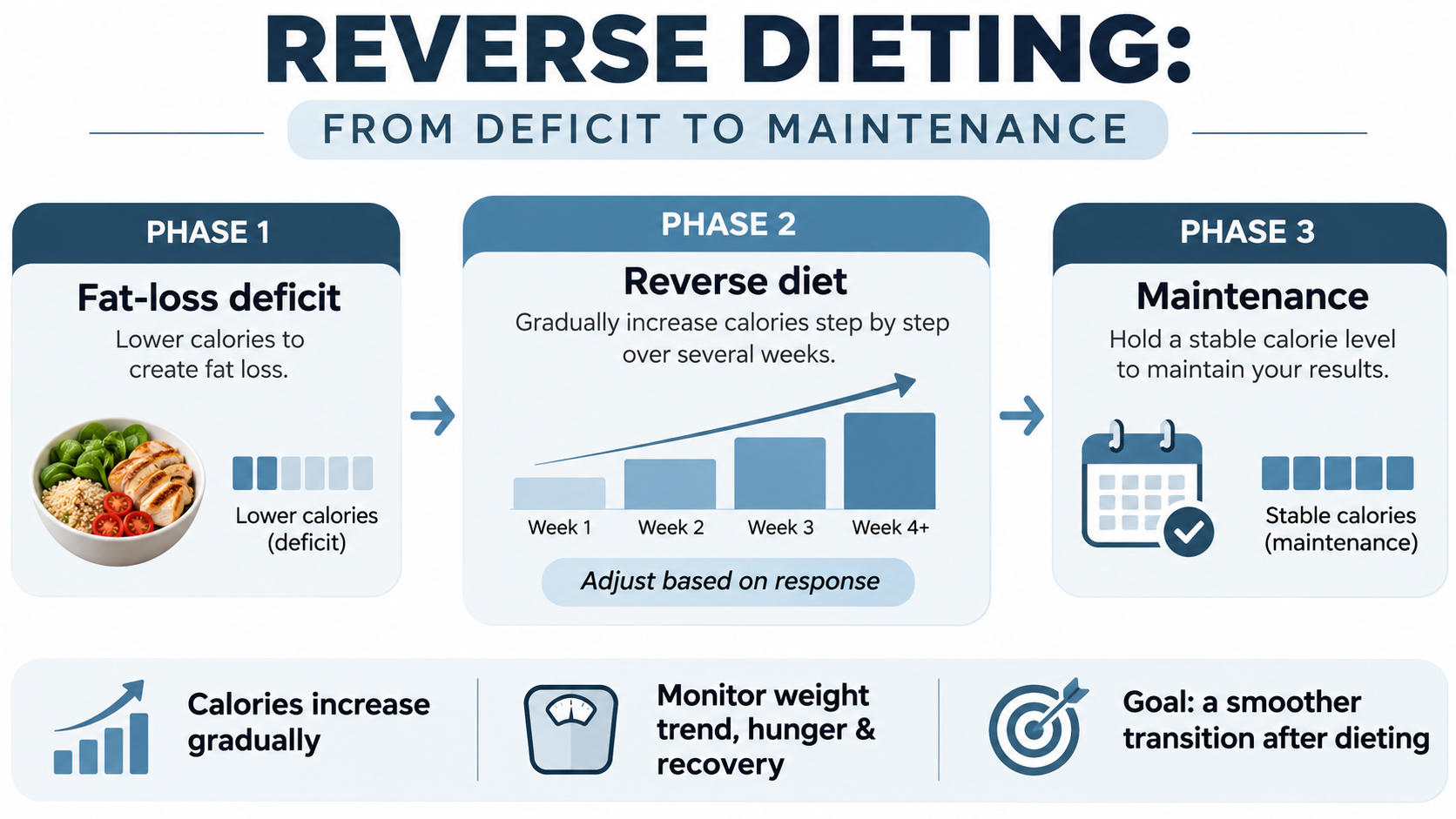
Reverse dieting describes gradually increasing calorie intake after a deficit, often in small weekly steps, while monitoring changes in weight, hunger, performance and routine. It can be a structured transition for people who prefer smaller adjustments.
How are they different?
Maintenance
The goal: settle into an intake and routine that broadly support weight stability and health.
Reverse dieting
The method: increase intake in stages towards a suitable maintenance level, adjusting as you learn.
Will increasing calories automatically cause fat gain?
Not necessarily. A higher intake may replenish muscle glycogen and shift water and digestive contents, causing a temporary rise on the scale. Whether body fat changes depends on longer-term energy balance, not the first few days of an increase.
Does reverse dieting repair your metabolism?
Claims that it automatically “fixes” a broken metabolism or lets everyone eat more without gaining fat are overstated. Energy expenditure can adjust after weight loss, and eating more can improve training performance and day-to-day energy, but slow increases have not been shown to provide a unique metabolic advantage for everyone.
Coach’s take: why we use reverse dieting
At Fatboyslim Fitness, a reverse diet is usually part of our structured post-fat-loss coaching. Rather than ending a deficit and leaving clients without a plan, we increase calories progressively, monitor weekly trends, and adjust based on hunger, training, recovery and body composition. It provides accountability and a practical transition towards maintenance. We use it because it suits our coaching approach, while recognising that research has not shown it to be essential or superior for every person.
A sensible post-diet checklist
- Set the goal: maintain your result, or move into a different training phase.
- Review the diet you have been following and whether it was too restrictive.
- Choose a practical maintenance intake or staged adjustment with appropriate support.
- Keep regular meals, enough protein, lifting and everyday movement.
- Assess trends over several weeks and adjust based on your response.
Who needs additional advice?
People who are underweight, pregnant, still growing, managing a medical condition or experiencing disordered eating should seek advice tailored to their needs rather than copying an internet reverse-diet protocol.
The takeaway
Our approach is to reverse diet in a structured way after a fat-loss phase, working towards maintenance while tracking progress. The benefit is the plan, consistency and coaching support; a slow calorie increase is not a guarantee against fat regain. Neither should be a punishment or an excuse for endless restriction. Also read why people regain weight after dieting and our protein guide.